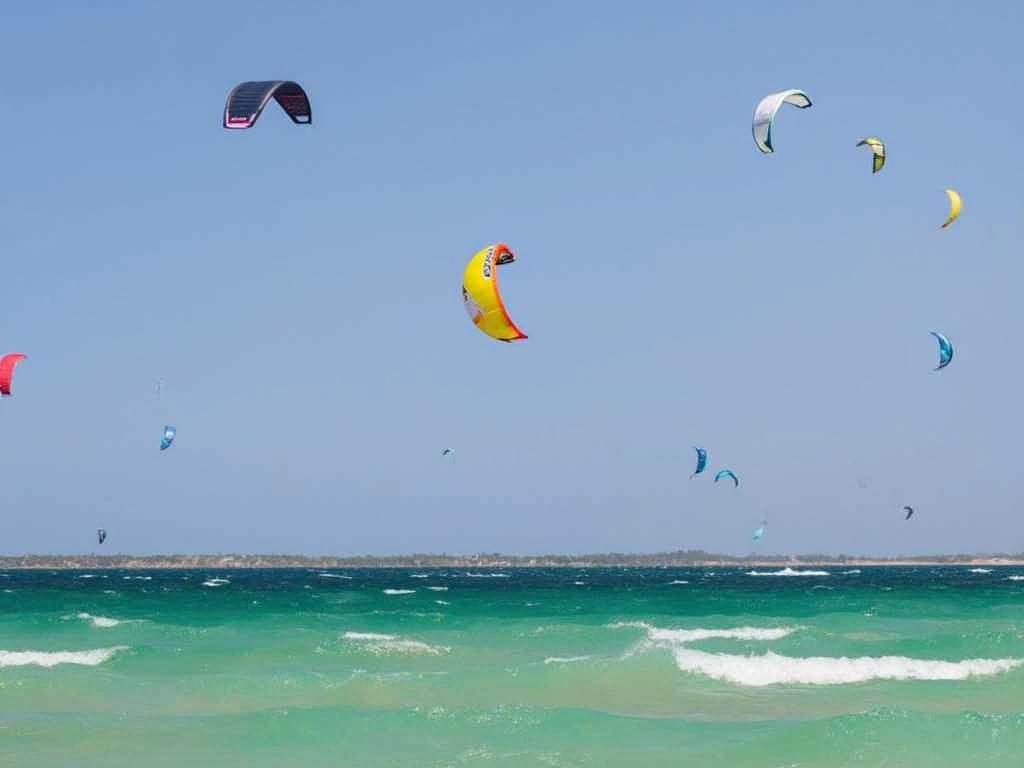
The primary kite season in Cabarete runs December through August. Within that window, the character of the wind changes by time of year. Here is the breakdown.
Spring and Summer (April to September): Peak Thermal Wind
The most reliable period for consistent afternoon sessions. Trade winds are reinforced by strong thermal lift as the Caribbean heat builds through the morning. Wind kicks in reliably mid-day and holds through the afternoon.
| Condition | Detail |
|---|---|
| Wind consistency | Highest. Predictable, strong afternoons every day. |
| Knot range | 15 to 25 knots, often reaching 20+ by 2pm |
| Kite sizes | 7m to 11m depending on rider weight |
| Water temperature | 80 to 84°F. Board shorts only. |
| Best for | Lessons, intermediate progression, guaranteed sessions, downwinders |
The IKA Freestyle Kite World Cup is held on Kite Beach during this window, typically June to August.
Winter (December to March): Frontal Wind
Popular due to holiday travel. Wind is driven by North Atlantic cold fronts rather than thermals. Still strong and very good for riding, but with more day-to-day variation. A front passage can mean 25 knots one day and 12 knots the next.
| Condition | Detail |
|---|---|
| Wind consistency | Good. Reliable 15+ knot days, with occasional lulls between fronts. |
| Knot range | 12 to 25 knots. Can be gusty around frontal passages. |
| Kite sizes | 8m to 12m |
| Water temperature | 77 to 80°F. A rashguard is recommended for longer sessions. |
| Best for | Strong conditions, holiday timing, cold-weather escapes |
Autumn (September to November): Low Season
Wind reliability drops significantly. September and October are the weakest months of the year. November begins to recover as trade winds return. This period also overlaps with Atlantic hurricane season, though direct impacts on Cabarete’s north coast are rare.
| Condition | Detail |
|---|---|
| Wind consistency | Lower. Variable direction, lighter speeds. |
| Knot range | 10 to 20 knots. Some days require large kites or offer no wind. |
| Kite sizes | 10m to 14m common |
| Water temperature | 80 to 84°F (warmest of the year) |
| Best for | Extended stays, DR exploration, lower accommodation costs |
Gear Notes
- All seasons: Board shorts and rashguard. No wetsuit needed.
- Lessons: All equipment provided by KiteDR. Nothing to hire or buy before you arrive.
- Advanced riders: If planning downwinders to La Boca or Punta Rucia, pack endurance gear and sun protection.
When to Book
December through August is the primary kite season. For the most consistent afternoons and warmest water, April to August is the sweet spot. For strong frontal conditions with holiday timing, December to February works well. Avoid September and October for a dedicated kite trip.
Book a kiteboarding lesson in Cabarete or ask on WhatsApp about current conditions before you travel. KiteDR runs beginner courses through the full kite season, with all equipment provided.
Frequently Asked Questions
When are the best months for kitesurfing in Cabarete?
April through August is the best window. Thermal winds build reliably each afternoon, reaching 15 to 25 knots by 2pm most days. The IKA Freestyle Kite World Cup runs on Kite Beach during this period. December to March is the second-best option, driven by North Atlantic fronts with consistent 15+ knot days.
What is the wind like in Cabarete in August?
August is one of the strongest months on Kite Beach. Thermal winds peak in July and August, with 20+ knot sessions most afternoons. Riders use kites from 7m to 11m depending on weight. IKO schools run at full capacity during this window because the conditions are reliable enough to guarantee daily lessons.
Is Cabarete wind consistent enough for beginner kiteboarding lessons?
Yes. The thermal pattern in Cabarete is predictable enough that IKO-certified schools schedule lessons with confidence from April through August. Sessions start around noon and hold for 3 to 5 hours most days. KiteDR’s 9-hour beginner course is built around this window, with all equipment included.
What happens to the wind in Cabarete in September and October?
September and October are the weakest months of the year. Trade winds lose consistency, speeds drop to 10 to 20 knots with variable direction, and some days have no rideable wind at all. November begins to recover as North Atlantic fronts start pushing through again from the north.
Does Cabarete get hurricanes?
Direct hurricane impacts on Cabarete’s north coast are rare. The town sits on the north shore of Hispaniola, and the island’s geography deflects the worst storm tracks. Atlantic hurricane season runs June through November, overlapping with the autumn low season. Most kite visitors avoid September and October for wind reasons regardless of storm risk.
What kite size do I need in Cabarete?
It depends on the season and your body weight. April through August thermal sessions: 7m to 11m. Winter frontal conditions: 8m to 12m. Low season autumn sessions: 10m to 14m when conditions allow. If you are taking lessons with KiteDR, all equipment is provided and your instructor selects the right kite for you on the day.
Is it possible to kitesurf in Cabarete in October?
Yes, but with lower expectations than the main season. October is the lightest month of the year for wind in Cabarete. The summer thermals have wound down and the frontal season does not start until late November or December. Wind averages 10-20 knots, the direction is variable, and sessions are not guaranteed every day. Experienced kiters who can work with lighter, patchier conditions will still get on the water. If you are planning your first lessons or working on fundamentals, October is not the right time to book. Beginner progression needs consistent 15-knot wind, and October cannot reliably provide that. For beginner kiteboarding lessons, April through August gives you the best chance of completing your course on schedule.
What is the windiest month in Cabarete for kitesurfing?
June and July are the peak months. The thermal trades blow 20-30 knots on most afternoons through the summer season, making them the most consistent and powerful wind window of the year. The full thermal season runs April through August, but June and July deliver the strongest sessions. December and January can match them on strong cold-front days, but frontal wind arrives in pulses and is less predictable than the steady afternoon thermals of summer.